>> Home
Weeping Purple Beech
Fagus sylvatica 'Purpurea Pendula'

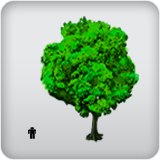
Height: 50 feet
Spread: 60 feet
Sunlight:


Hardiness Zone: 5
Other Names: Common Beech
Description:
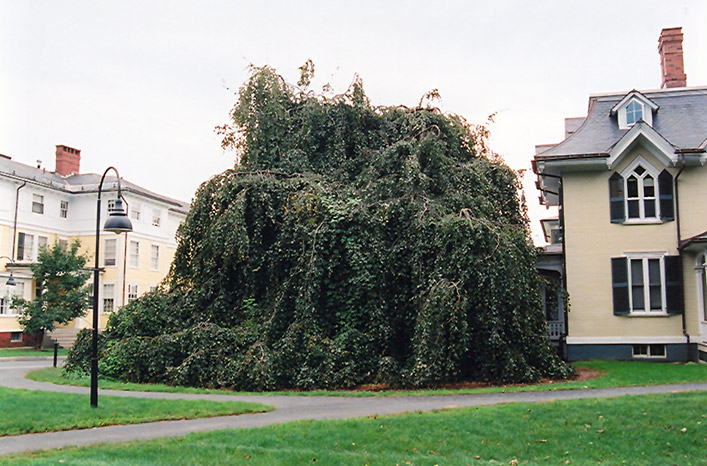
An awe-inspiring and graceful accent tree with swooping, pendulous branches and rich purple foliage all season; requires a great deal of room to grow; prefers rich soil and regular moisture
Ornamental Features
Weeping Purple Beech is primarily valued in the landscape for its highly ornamental weeping form. It has attractive purple deciduous foliage. The serrated pointy leaves are highly ornamental and turn an outstanding coppery-bronze in the fall. The smooth silver bark is extremely showy and adds significant winter interest.
Landscape Attributes
Weeping Purple Beech is a dense deciduous tree with a rounded form and gracefully weeping branches. Its average texture blends into the landscape, but can be balanced by one or two finer or coarser trees or shrubs for an effective composition.
This is a relatively low maintenance tree, and is best pruned in late winter once the threat of extreme cold has passed. Deer don't particularly care for this plant and will usually leave it alone in favor of tastier treats. It has no significant negative characteristics.
Weeping Purple Beech is recommended for the following landscape applications;
- Accent
- Shade
Planting & Growing
Weeping Purple Beech will grow to be about 50 feet tall at maturity, with a spread of 60 feet. It tends to fill out right to the ground and therefore doesn't necessarily require facer plants in front, and should not be planted underneath power lines. It grows at a slow rate, and under ideal conditions can be expected to live to a ripe old age of 120 years or more; think of this as a heritage tree for future generations!
This tree does best in full sun to partial shade. It does best in average to evenly moist conditions, but will not tolerate standing water. It is particular about its soil conditions, with a strong preference for rich, acidic soils. It is somewhat tolerant of urban pollution. This is a selected variety of a species not originally from North America.